The New Criterion is probably more consistently worth reading than any other magazine in English.
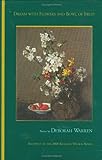
BooksMay 2009 Shorter notice A review of Dream with Flowers and Bowl of Fruit by Deborah Warren On Dream with Flowers and Bowl of Fruit, by Deborah Warren. Randall Jarrell once praised Richard Wilbur’s “lyric calling-to-life of the things of this world.” A similar awakening takes place in Deborah Warren’s Dream with Flowers and Bowl of Fruit, recipient of the 2008 Richard Wilbur Award. In the title poem, Warren candidly admits that her “dreams these days are boring”:
The last two lines are beautiful and memorable: the way “vase” sounds against “miss” and “grapes,” and the way the lines disrupt the poem’s chronology. Is Warren describing a dream she would like to have, or one she has not had in a long time? Or, are the flowers and grapes moving in real time in front of her? “Song of the Egg” is one of the most arresting poems in the book and is worth quoting in full:
This poem functions in the same way as the title poem quoted above: death and life exist symbiotically, much like melodrama and mundanity in “Dream with Flowers and Bowl of Fruit.” It would be hard to choose a favorite image—“death already curled” or the “brilliant crowing”—if it were not for the way the last two lines carry away the poem. Warren even invokes and distinguishes the letter “O,” bringing the image of the egg home to the reader. Warren is fascinated by the intersection of life and death, best represented in “The Rider” and “Swimmer,” in which the first figure “mixes with the night” and the second is shown “diving into the two dimensions.” Dream with Flowers and Bowl of Fruit is not, however, completely consumed by birth and death but, rather, by a middle ground or sleep-state: dreaming. A few poems falter, despite their energy and movement, for example “The Ballet of the Eight-Week Kittens,” “Haircut,” and “Lullaby in Blue,” which begins “Maybe I could paint you the way to sleep” and ends “But I’ll only break/ the palette and brush and stir you with loud red love.” In these poems the energy—forced and sentimental —is too sweet for the subject matter, which would be served better by plainer verse. Perhaps it is Warren’s fear of the still-life in her dreams that motivates the liveliness in this book. Her seemingly effortless quest to avoid banality recalls Wilbur’s poem “Walking to Sleep,” in which the speaker warns: “Avoid the pleasant room/ Where someone, smiling to herself, has placed/ a bowl of yellow freesias.” Warren’s fine collection is a pleasant room that should by no means be avoided. This article originally appeared in The New Criterion, Volume 27 May 2009, on page 74 Copyright © 2012 The New Criterion | www.newcriterion.com http://www.newcriterion.com/articles.cfm/Shorter-notice-4091
rate this article for your user profile
E-mail to friend
|
view more >
Webcasts
Anthony Daniels on the Euro Crisis
Andrew C. McCarthy: The Muslim Threat
Roger Kimball: The Grim Future of Statism |
add a comment