It operates as a refuge for a civilizing element in short supply in contemporary America: honest criticism
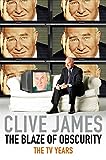
BooksThe title of Clive James’s fifth and latest volume of memoirs, The Blaze of Obscurity, is characteristically self-deprecating. Subtitled “The TV Years,” it makes clear that James never had any illusions about the ephemeral format in which he worked for nearly two decades. “It was television that made a civilized life possible for my family, and made it possible for me to write only from inner compulsion, and never to a market imperative,” he explains. “As a clincher, it was television that made it possible for me to go on writing poetry, ever and always at the heart of my desire.” Still, James considers his “Postcard from . . .” television travel series to contain some of his finest writing, and he holds a similarly lofty opinion of Fame in the Twentieth Century, a documentary that never can resurface because of copyright issues. The fate of such projects, including a short-lived production company he founded, partly explains his ongoing critical engagement with celebrity and its common sequel, obscurity. James imbibed lessons from each aspect of the television business, yet for him it all comes back to writing. “The secret of composition in any form is the appropriate application of effort,” he notes. “Editing,” he adds, “is an essentially poetic process akin to compressing carbon until you get diamonds.” Such remarks—however dull when quoted out of context—assume a kind of moral weight in his narrative. After describing some trivial post-production work, he muses: Much of the final work in a movie shoot always consists of getting the shot you should have got. You have to keep the ethics in mind—rescuing a sequence is one thing, telling a lie is another—but you always have to keep the ethics in mind anyway. To work in any art form requires an ethical decision every five minutes. This could serve as an epigraph to James’s first volume in the series Unreliable Memoirs, reissued last year in the United States. “Unreliable” is a hedge: he calls the book a “disguised novel,” with “the whole affair [a] figment got up to sound like the truth.” Yet we know from his later memoirs and interviews that much in the story, which is about growing up in suburban Sydney in the 1940s and 1950s, is real. Jason Weisberg, a former editor of Slate, has called Unreliable Memoirs the funniest book he’s ever read. But for many readers, the poignancy that attends even the bawdiest of James’s anecdotes will deter a similar reaction. After all, the book’s epigraph comes from Book 24 of the Iliad, the passage in which Hector’s wife mourns his slaying. Early on, James recounts news of his father’s death as a World War II pow returning to Australia from Japan. After years of anxious waiting, James’s mother was all set to greet her husband when a telegram told her that his plane had crashed in Manila Bay. “At the age of five I was seeing the full force of human despair,” James writes. “I think that I was marked for life.” Marked, he might have added, by a permanent distrust of exceptionalism: My father was a free human being. So was my mother. What happened to them, terrible though it was, belongs in the category of what Nadezhda Mandelstam, elsewhere in [Hope Against Hope], calls the privilege of ordinary heartbreaks. Slowly, in those years, the world was becoming aware that things had been happening which threw the whole value of human existence in doubt. But my father’s death was not one of them. It was just bad luck. I have disliked luck ever since—an aversion only increased by the fact that I have always been inordinately lucky. This intellectual toughness characterizes the best of James’s critical writings, even as it liberates him to play the wag. Once James has dispatched “bad luck” as an unworthy foe, he is free to indulge in gratuitous raillery, instances of which are the some of the most authentically funny moments in Unreliable Memoirs. (Of a rueful decision to use his bed as a trampoline: “It was a mistake to let Graham Truscott play. He had a double chin even at that age and a behind like a large bag of soil.”) But James’s most pointed barbs are reserved for himself. The author is shown as a young terror, donning a cape and mask at nightfall, ransacking construction sites and decimating lawns with makeshift scooters. In relating each childhood sequence, James’s tone is wry and bemused, happily void of neurotic tics or psychobabble. Yet the shade of his father is never absent. For much of the book, the young James questions his own virility, latches onto strong male figures, and tries hard to alienate his mother. Nonetheless, the two bonded over a ritual viewing of four movies a week: “My mother and I quarreled frequently but we reached a comforting unanimity on such matters as what constituted a lousy picture.” James began as a hungry writer, and he never lost sight of his origins. In Unreliable Memoirs, he recaps a stint in the Australian National Service. His account heralds the qualities of stealth and resourcefulness that would serve him well in dealing with petulant supermodels and intransigent network execs: They had got what they wanted out of me. But on the other hand I had got what I wanted out of them. I had acquired my first real measure of self-sufficiency, which is something other, and quieter, than mere self-assertion, and probably the opposite of being self-absorbed. This article originally appeared in The New Criterion, Volume 29 September 2010, on page 72 Copyright © 2012 The New Criterion | www.newcriterion.com http://www.newcriterion.com/articles.cfm/Shorter-notice-6287
rate this article for your user profile
E-mail to friend
|
A review of the novels of R. K. Narayan, newly collected by Everyman's Library. Webcasts
Anthony Daniels on the Euro Crisis
Andrew C. McCarthy: The Muslim Threat
Roger Kimball: The Grim Future of Statism |
add a comment