
It operates as a refuge for a civilizing element in short supply in contemporary America: honest criticism
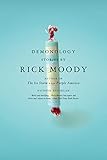
BooksRick Moody Demonology. Gregor Samsa woke up one morning to find that he had been transformed into a cockroach is no longer enough. What the thing needs is a corollary narrative about an estranged sister trying to escape the psychic scars left upon her by her suburban foster family. She dreams of cockroaches. Cockroaches infest her apartment and she squashes them. Critics would declaim: Not since Lolita have we seen such a powerful metaphor for the collision of the Old World with the New. Forecast from the Retail Desk, a twenty-three-page story in Rick Moodys new collection Demonology, takes as a protagonist a man who believes he can predict the future. Hes often wrong, but he is sometimes nearly right. Also in this story, a child has leukemia (we never meet the child, but the protagonist worries about him). A car accident cripples a high school enemy of our protagonistthe car was struck while the enemy was smooching his intergenerational gay lover. Someone tries to jump on a moving subway; he falls and is crushed. The train lurches to a stop, hurtling our protagonist into the lap of a stranger, a woman he later marries. His brother has a torrid one-night stand. The same brother shows up with a dented, and possibly stolen, Porsche with blood on the dash and seat. Our hero believes that his brother has accidentally killed his date and hidden her in a swamp and is now asking for help in covering it up. He is wrong, but they fight. These stories are salvos of melodrama, strings of the improbable. We are presented situations in which the psyche would be rubbed raw, but we are left to imagine the ramifications, the nuances, the complexities. In the story Drawer, a man has put his absent wifes armoire on the beach. Much is made of her having called what the man would refer to as a dresser an armoire. His wife had kept the top drawer of the armoire locked. We find the nameless man standing with a crowbar, ready to heat the house for days with the past tense of her. Hes going to burn her diaries and the furniture. The story is an illustration of simple spite. Johnson wrote that writing is engaging when new things are made familiar, and familiar things are made new. Here, we have no new thing, and no fresh elucidation of the common. We have a retelling of Carvers Why Dont You Dance? with enhanced spite and added violence. Many consider Moody a very serious artist. He studied creative writing at Brown (a program dominated by Robert Coover and John Hawkes) and Columbia. He won a Guggenheim Fellowship last year. Those odd articles about the next generation of writers tend to include him. Ang Lee made Moodys novel The Ice Storm into a movie. Kirkus gave his 1997 Purple America a mixed review, but reported that a very talented writer is beginning to hit his stride. The New York Times called it a breathtaking novel. Purple America is a good book, not breathtaking, certainly flawed, but good. In one scene, Hex Raitliffe (caregiver for a weekend to his ailing mother) and his high school crush (just picked her up in a bar, bona fortuna!) have taken Mother Raitliffe to the hospital. Moody riffs on the language of hospitalsthat odd combination of abbreviation and verbosity that has been such a hit on the popular television series ER. One of the characters starts to cry and Moody states it thus: Theres an arching of eyebrows and a carefully monitored upsurge, at her lower lids, of saline precipitate. An author lucky enough to corner his characters in such a dreadful spot should relish the opportunity to lay bare some complicated behaviors, but Moody chooses instead to turn his attentions to rococo language games. The character is either crying to manipulate the others with fake tears or crying involuntarily (which I think we call sad). How could one know? It took four readings just to discern whose tears those are. The nature of the tears remains unspecified. What a lot of good the language of the clinic has done us. This turn to the byzantine is endemic in Demonology. Moody is a list maker. He writes like a stoned amateur jazz musician on a thousand-bar solo noodling endless variations for his own amusement. One of Moodys characters asks if the illusionism of mannerism is more realistic than the realism of the Renaissance, if artifice magnificent, playful, salacious, decadent, sullenis more real than the studies from cadavers of Leonardo and Michelangelo. It isnt. It is an exercise, much like thinking of five words instead of the right one. It doesnt flesh out characters or engage the reader. In his notebooks, Fitzgerald wrote: In a short story, you have only so much money to buy just one costume. Not the parts of many. One mistake in the shoes or tie, and youre gone. Moodys stories are like fashion shows, the characters are garish and thin. Max Watman This article originally appeared in The New Criterion, Volume 19 February 2001, on page 76 Copyright © 2012 The New Criterion | www.newcriterion.com http://www.newcriterion.com/articles.cfm/moody-watman-2262
rate this article for your user profile
E-mail to friend
|
by Max Watman Reviews of "The View from Castle Rock: Stories," by Alice Munro; "Talk Talk," by T.C. Boyle; and "Special Topics in Calamity Physics," by Marisha Pessl. Webcasts
Anthony Daniels on the Euro Crisis
Andrew C. McCarthy: The Muslim Threat
Roger Kimball: The Grim Future of Statism |
add a comment